In 1903, when John Charles Olmsted walked the hillside east of what would become Frink Park, he gave the ground a name that has quietly outlived every real estate listing written about it since: the Rainier Heights Landslide Section. He wasn't being poetic. Five years earlier, in 1898, a slide had taken out sixteen houses and a sawmill on that same slope. Olmsted's recommendation was blunt. Turn the land into a park, he wrote, because subdivided lots there would mean endless trouble as houses kept "moving gradually on to adjoining land owned by someone else."
The city listened, partly. Leschi Park, Frink Park, and Colman Park exist today because Olmsted steered Lake Washington Boulevard away from the shoreline and through the hills instead, a routing decision you can still feel every time the road winds instead of running straight. But the houses came anyway, on the streets Olmsted didn't get to protect. And the ground has kept doing what it did in 1898.
If you're buying or selling a hillside home in Leschi right now, that history isn't trivia. It's the reason your transaction will likely involve paperwork a flatter Seattle neighborhood rarely sees.
The slope has a memory, and the city keeps records of it
The 1898 slide wasn't a one-time event. Seattle's own municipal record shows the neighborhood dealing with the same hillside for decades. In late 1909, residents living between 32nd and Dearborn and 33rd and Judkins petitioned the city council directly, describing a slide "caused by the recent grading of streets in that district." The council responded within a month, authorizing pile driving and bulkhead construction on 31st Avenue South. It wasn't enough. By 1912, the council was directing the Board of Public Works back to the same stretch to remove slides and build rock drains.
Sometime before 1926, the city built a 517-foot drainage tunnel under Lake Washington Boulevard South, between Charles and Judkins streets, to manage the water moving through that hill. That fall, a slide opened up near the tunnel's north end. A cave-in followed that winter. By 1933, a city engineer inspecting the tunnel could only get 289 feet in before the timber bracing gave way to collapse he couldn't see past.
This pattern hasn't stopped at the edge of the twentieth century. In 2019, a property on 32nd near Norman, sitting inside the same 1898 slide area, changed hands after its longtime owner, jazz musician Ruby Bishop, passed away. The new owners cut down a mature cedar that had spent decades pulling water out of that hillside, work that wasn't permitted. The city cited the removal and fined the owners over $90,000, later reduced to $20,000. The two new houses built on the site sold for a combined $7 million, on land the developers had bought for just over $1 million. And in January 2024, a section of hillside gave way on Lakeside Avenue near East Alder Street, prompting a Seattle Department of Transportation response that KIRO 7 covered on the ground.
None of this means Leschi is a risky place to own a home. Thousands of families have lived on these streets for generations. What it means is that the same hillside creating the lake views everyone comes to Leschi for has also generated a documented, century-long relationship with slope movement, and the city has built its permitting and disclosure rules directly around that relationship.
What the city actually requires on these lots
Seattle's Environmentally Critical Areas code treats landslide-prone areas as ground that has failed before or is likely to fail again, based on geology, groundwater, or topography, which is a fairly exact description of what happened on 32nd Avenue in 1898 and again in 2024. Steep slope zones under that same code are defined by grade and vertical rise, and they carry a mandatory buffer at both the top and the toe of the slope. If a parcel falls inside one of these mapped areas, a lot of ordinary home-improvement flexibility disappears.
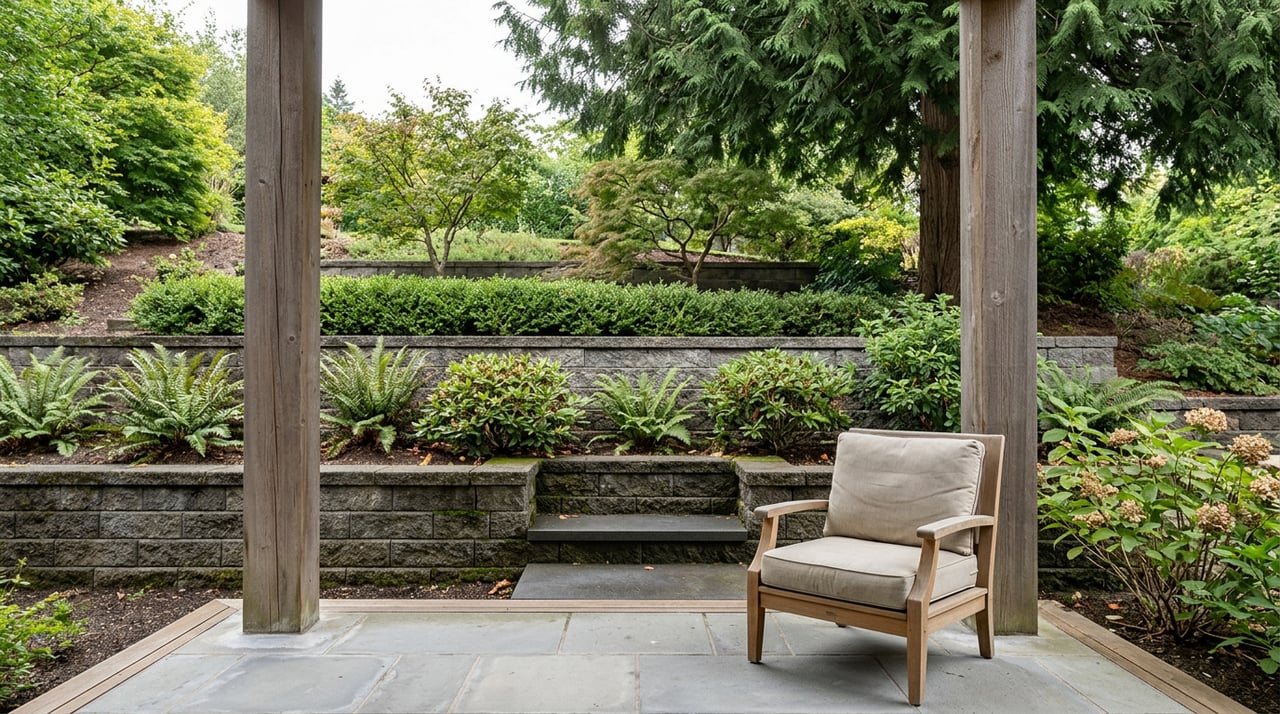
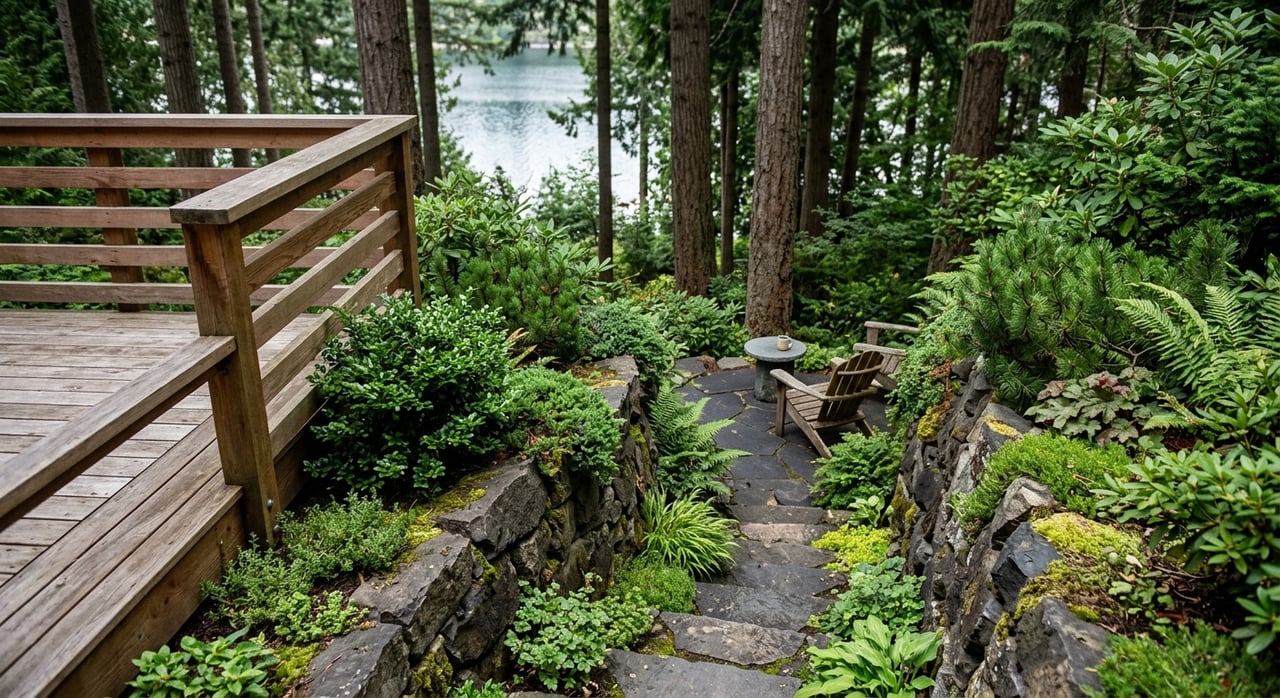
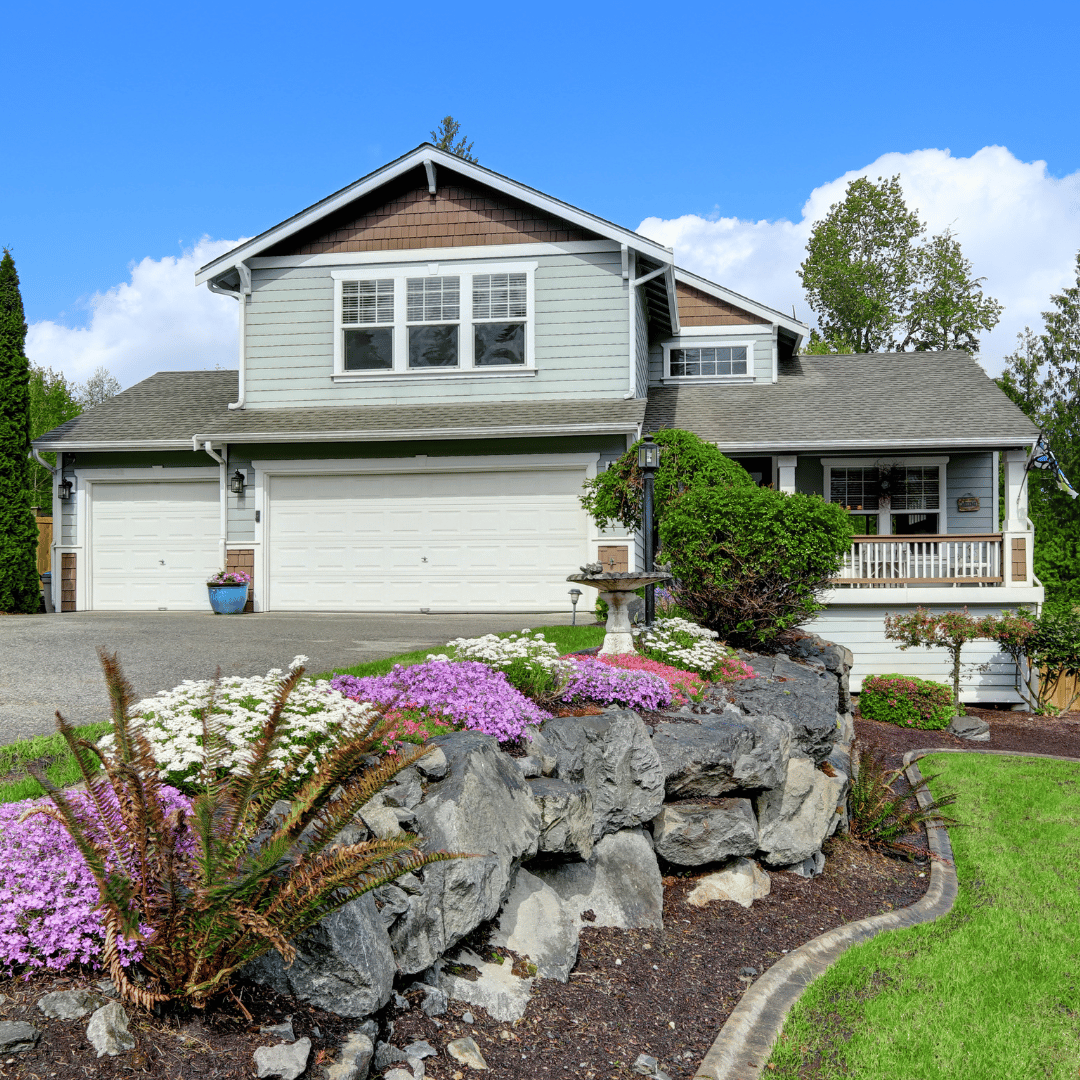
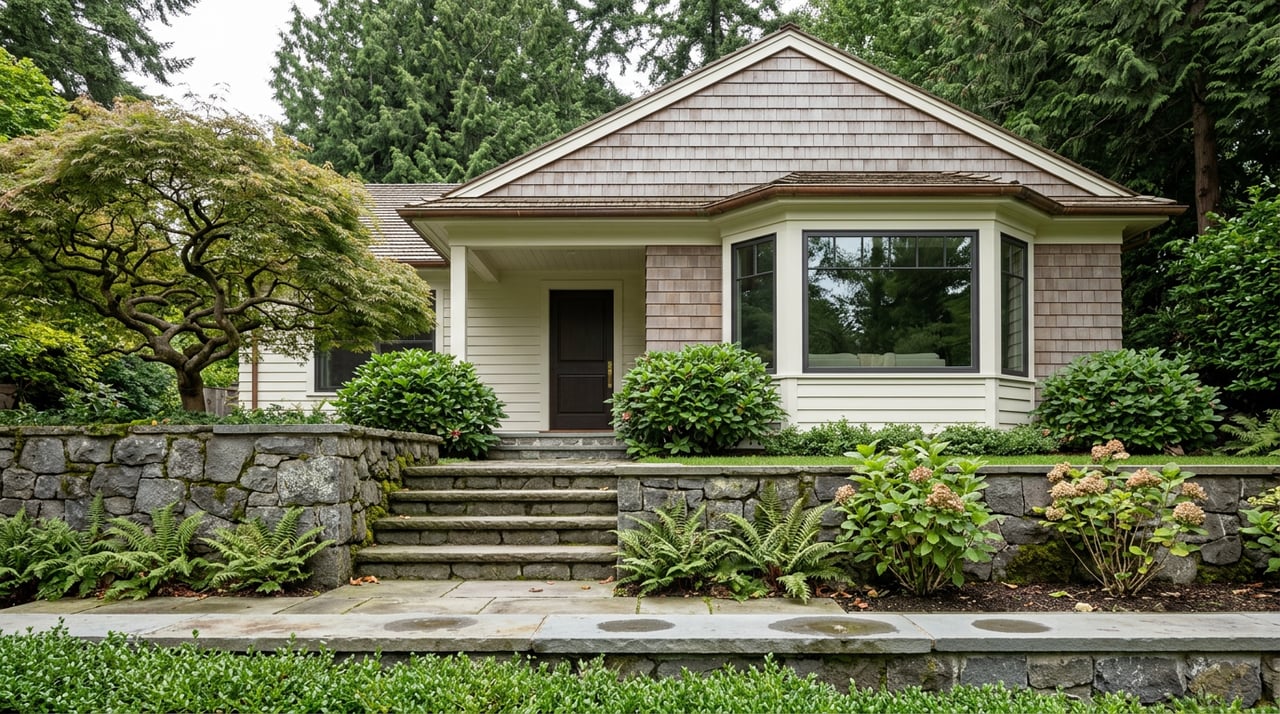
Outside an ECA, a homeowner can often build a retaining wall up to four feet without a permit. Inside one, that exemption goes away entirely. The city's own guidance on retaining walls and rockeries is direct: you cannot build a wall of any height on an ECA parcel unless you meet specific requirements or secure an exemption, and rockeries or retaining walls are never eligible for the small-project waivers available elsewhere in the code. Rockery designs on these lots need a stamp from a geotechnical engineer or must follow the city's prescriptive installation standards.
That requirement shows up in real dollars. Local retaining wall contractors put small decorative walls at roughly $5,000 to $12,000, moderate residential rockeries in the $12,000 to $35,000 range, and larger engineered slope-stabilization projects anywhere from $35,000 to $100,000 or more, depending on drainage correction, access, and whether an old wall needs to come out first. A homeowner on a flat lot in Ballard replacing a decorative garden wall is not looking at the same numbers or the same review process as a homeowner on 32nd Avenue South replacing a leaning rockery that was never engineered in the first place.
Where this shows up in your paperwork
Washington's Seller Disclosure Statement, known to most agents and attorneys as Form 17, has to reach the buyer within five business days of mutual acceptance under state law. The buyer then has three business days to review it and decide whether to walk away. Most of the form can be waived by agreement between buyer and seller. The Environmental section cannot. If the seller answers yes to any question there, including the one asking about drainage problems, slope instability, or past landslides, the buyer is entitled to see that section regardless of what else gets waived elsewhere in the contract.
On a flat lot, that question is often an easy no. On a Leschi hillside parcel with a documented history, prior geotechnical work, or a retaining wall installed by a previous owner, it frequently is not. A seller who genuinely doesn't know the slope history of their own lot can honestly write "don't know," which the law treats as an acceptable answer since sellers aren't required to investigate beyond what they actually know. But a seller who does know, because a permit exists, because a neighbor mentioned a past slide, because the listing agent found a geotechnical report during a prior remodel, has an obligation to say so.
What to ask for before you write or accept an offer
A few concrete requests make this manageable rather than alarming:
- Ask whether the parcel appears in Seattle's Environmentally Critical Areas map layer, which the city makes available through its Property Information Map tool. This is advisory rather than final, but it tells you where to look next.
- Request any existing geotechnical report for the property or, if none exists, ask whether a report was prepared for a neighboring parcel. The city itself notes that a nearby report can help scope what a new one would need to cover.
- Pull the permit history for any visible retaining wall or rockery on the lot. A wall built without a permit on an ECA parcel is a different conversation than one installed with an engineer's stamp and city sign-off.
- Look closely at any existing wall for leaning, bulging, or separation, since local contractors consistently point to inadequate drainage, not weak materials, as the leading cause of wall failure on these slopes.
- If landscaping or excavation work is part of your plans after closing, remember that a call to 811 before digging is free and standard practice anywhere in Washington, hillside or not.
Why this matters more in today's market
Seattle entered September 2026 with resale inventory above four months for the first time since January 2012, a shift that puts more homes in front of buyers and more competition in front of sellers than the market has seen in over a decade. In a market like that, a Leschi seller who can hand a buyer a clean geotechnical history and documented permits on any existing retaining wall is offering something that stands out. A buyer who knows to ask for that history before waiving an inspection contingency is protecting themselves in a way the median list price never will.
Leschi's lake view and its paper trail come from the same hillside. Understanding one means understanding the other, and that understanding is what separates a smooth closing from a surprise three business days after mutual acceptance.
A few questions worth asking directly
Does every home in Leschi sit inside a mapped landslide or steep-slope area? No. The documented slide history concentrates in a specific stretch, generally east of 31st and 32nd Avenue between Plum Street and Yesler Way, the area Olmsted identified in 1903. Plenty of Leschi lots sit outside that zone entirely. The only way to know for a specific parcel is to check the city's Property Information Map.
If a seller marks "don't know" on the slope question, should that worry me? Not necessarily. Washington law only asks sellers to disclose what they actually know, not what a title search or inspection might eventually reveal. "Don't know" is a legitimate answer and often the honest one for a longtime owner who never had reason to dig into permit archives.
Is this history relevant if I'm buying a condo rather than a single-family lot? It can be, if the building sits on or near a mapped ECA or steep slope, since the same permitting rules apply to structural work on multi-unit buildings. It is worth asking regardless of property type, particularly for anything built into or against the hillside itself.
If you are weighing a purchase or a sale on one of Leschi's hillside streets and want a clearer read on what a specific parcel's history looks like, Hinds Team WA can walk through the permit records, disclosure language, and practical next steps with you before you're three days into a rescission window wondering what you missed.