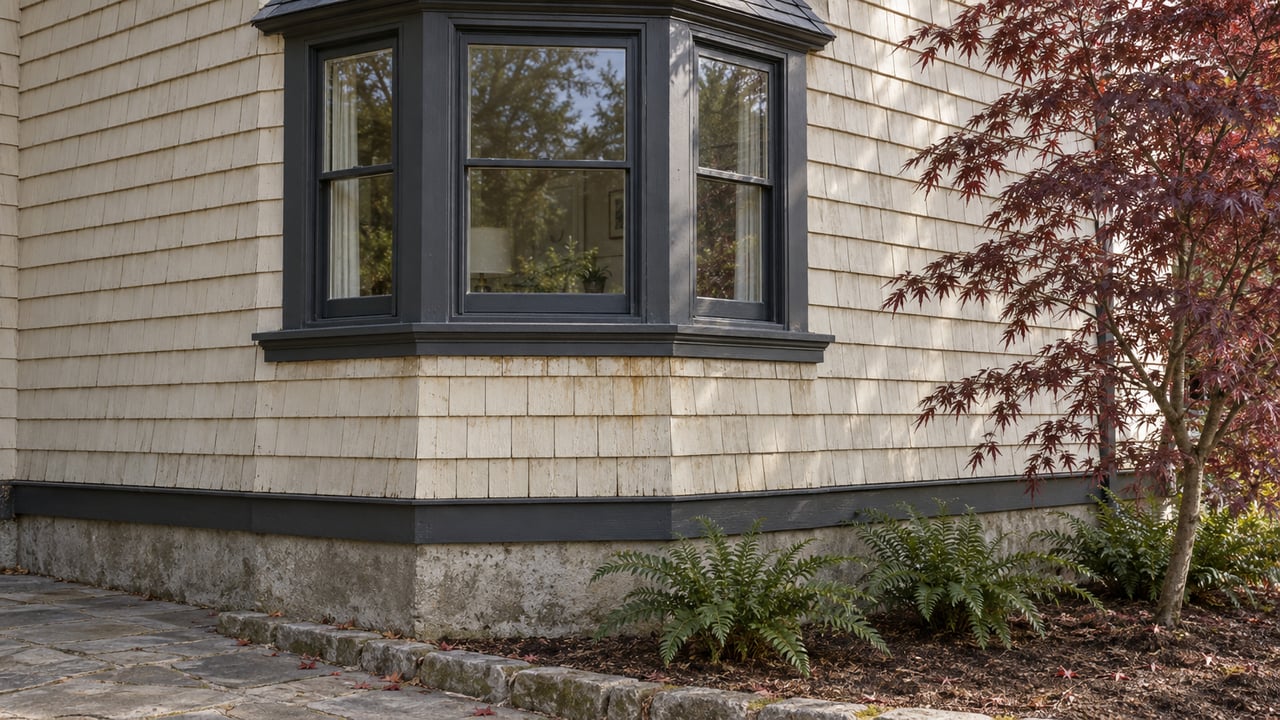
What happens if a buyer's inspector finds a rusted vent pipe near the foundation the same week your Madrona listing is supposed to go pending? For decades, the answer was simple: the state would cover up to $60,000 in cleanup if it ever leaked, at no cost to the homeowner, according to the Washington State Pollution Liability Insurance Agency. That answer changed in the summer of 2025, and a surprising number of sellers in Madrona's older housing stock don't yet know it.
Madrona's identity was built by the era this problem comes from. The neighborhood was named by John Ayer, who donated the land for Madrona Park after a species of tree common to the area, and its blocks still carry homes from the years when Seattle heated almost entirely with oil. The Charles R. Bussell Residence, a Mediterranean Revival home facing both Lake Washington and the Cascades, was built in 1892 and became a Seattle landmark in 1979. Epiphany Parish dates to 1907. The neighborhood's documented mix of Craftsman, Foursquare, and Tudor-transitional homes reflects a period of construction that ran well before natural gas service reached Washington homes in 1956. Heating oil was the dominant residential fuel in Seattle roughly from the 1920s through the 1960s, and a lot of that fuel sat in underground steel tanks that were never removed when owners switched systems.
That history is exactly why this year's change to Washington's cleanup program matters more here than in a neighborhood built mostly after 1980.
A Safety Net Sellers Assume Still Exists
For years, the Washington State Pollution Liability Insurance Agency ran the Heating Oil Insurance Program, a no-cost policy for owners who registered their tank before a leak occurred. It covered up to $60,000 per claim for cleanup costs on the homeowner's property and on a neighboring property if contamination spread, and it required no premium from the homeowner. Real estate agents who worked through the 1990s and 2000s in older Seattle neighborhoods learned to mention it in the same breath as a home inspection, because it made a scary problem financially survivable.
That policy expired on June 30, 2025. PLIA stopped accepting new claims after July 31, 2025. If your tank has been sitting quietly and undiscovered, there is no longer a state insurance policy waiting to absorb the bill the way there was for the previous three decades. Claims already filed for releases reported before July 1, 2025 are still being administered until they close or the funds run out, but that window has shut for anyone learning about a tank today.
What Replaced It, and Why the Terms Are Different
PLIA didn't eliminate assistance. It replaced the insurance model with the Heating Oil Loan and Grant Program, a structure that still caps out around $75,000 per project but works on a different logic: part grant, part loan, and entirely dependent on when you apply.
| Heating Oil Insurance Program (expired) | Heating Oil Loan and Grant Program (current) | |
|---|---|---|
| Cost to homeowner | None, funded by fees on oil dealers | Grant portion free, remainder is a loan |
| Cleanup coverage | Up to $60,000 per claim | Up to $60,000 cleanup grant, plus assessment grant |
| Total cap | $60,000 per claim | $75,000 per project, combining grants and loan |
| Repayment | None | Loan portion repaid over 30 years |
The new program still helps, but it asks a homeowner to do something the old one never did: wait for a calendar window to open, and then wait again for a review process, before any money moves.
The Calendar Problem Nobody Mentions
Here is the part that catches Madrona sellers off guard. The Heating Oil Loan and Grant Program only accepts applications twice a year, in a spring cycle (typically May and June) and a winter cycle (typically November and December), with each window open for 45 days. The 2026 spring cycle ran from May 4 through June 18. As of today, the winter cycle hasn't been announced yet, PLIA has said it will post specific dates when the window is near.
That timing works fine for a homeowner who discovers a tank on a random Tuesday with no closing date looming. It works far less well for a Madrona seller who lists a character home in September, gets an accepted offer within days, and then has an inspector flag a suspected tank during the standard Puget Sound inspection period. A typical Washington residential closing runs somewhere around 30 days from mutual acceptance. A PLIA grant cycle runs 45 days just to accept applications, then requires an initial review, a State Environmental Policy Act checklist, and a public comment period before funding is even offered. The two calendars don't line up, and if a tank surfaces mid-transaction outside an open application window, the seller is negotiating price and repair credits with no state assistance available on the timeline the sale requires.
This is the actual risk in 2026: not that Madrona has old tanks, which has always been true, but that the safety net homeowners have relied on for a generation now runs on a schedule that a fast-moving real estate transaction can easily miss entirely.
What to Check Before You List, or Before You Offer
Titan Inspection Services notes that Washington's seller disclosure form specifically asks about underground oil tanks, so guessing isn't an option once you're under contract. A few things are worth doing well before that point.
Look at the home's construction date and heating history first. If a Madrona home was built before 1970 and was later converted from oil to gas or electric heat, the probability of a tank still in the ground is high enough to investigate rather than assume away.
A handful of visual signs tend to show up during a careful walk of the property: a small vent pipe near the foundation, roughly an inch and a half across, a two-inch fill pipe cap in the yard that may sit flush with the grass, two copper lines running through the foundation wall that once served as supply and return for an oil furnace, or a patch of lawn that never quite grows in, sometimes a sign of an old delivery spill. Home inspectors, including firms like Titan Inspection Services that work across older Seattle housing stock, are trained to flag these indicators, though confirming an actual tank underground usually requires a professional sweep using a metal detector or ground-penetrating radar.
Before spending money on a sweep, it's worth checking whether the property already has a record on file. The Seattle Fire Department has maintained underground storage tank records since 1996, and that database is a free first step before hiring anyone.
If a Tank Turns Up
Once a tank is confirmed, Seattle Fire Code allows two paths. It can be abandoned in place, meaning any remaining oil is pumped out, the tank is triple rinsed, and then filled with sand or concrete slurry. Or it can be fully excavated and removed, which costs more but lets an inspector examine the soil underneath directly, which tends to be the faster way to satisfy a nervous buyer's lender.
Either path requires a Seattle Fire Department permit and must be performed or supervised by someone certified by the International Code Council as an Underground Storage Tank Decommissioner. Seattle-based firms including Filco Company and Seattle Tank Services handle this work regularly, along with soil testing to confirm whether contamination is present.
Cost depends entirely on what the ground reveals. The City of Seattle's own guidance puts a clean decommissioning at roughly $700 to $1,000. Industry sources that track the harder cases put the range at up to $100,000 or more when contamination has spread, though that outcome is the exception rather than the rule. Under Washington law, the current owner is liable for cleanup regardless of who originally installed the tank, and there's no statute of limitations on that liability, which is exactly why so many real estate transactions stall when this surfaces late rather than early.
Handling this before listing, rather than waiting for an inspector to find it, keeps the decision on the seller's timeline instead of the transaction's.
A Few Direct Questions
Does every pre-1970 Madrona home have a buried tank? No. Plenty of homes converted decades ago had their tanks removed at the time, and some never used oil heat at all. Construction date raises the odds of investigation, it doesn't confirm the presence of a tank.
What if I have an open PLIA claim from before the 2025 change? Claims for releases reported before July 1, 2025 are still being administered under the old insurance program until they close or the funds are exhausted. That door closed for new claims, but it hasn't closed for existing ones.
Can I sell a home with a known tank still in the ground? Yes, but the disclosure form requires you to say so, and buyers or their lenders often make decommissioning a condition of closing rather than something to handle after the fact, which tends to cost the seller negotiating leverage rather than saving time.
If you're weighing a sale in Madrona, or looking at a character home there and want a clear read on what an old furnace conversion might mean for your timeline, the Hinds Team has spent decades working through exactly this kind of neighborhood-specific detail with Madrona sellers and buyers. A conversation before you list often saves more time than a discovery after you're under contract.
This article is general information, not legal, tax or financial advice. Consult a qualified professional about your situation.