Drive along Rainier Avenue South past the Mount Baker light rail station this fall and you will see fencing where a parking lot used to sit, cleared ground where the old University of Washington Consolidated Laundry building stood for decades, and a construction schedule that finally has real dates attached to it. Demolition on the west side of the station started in June. A groundbreaking is set for October. For a corner of the neighborhood that has looked essentially frozen since the station opened in 2009, this is the first visible motion in years.
If you are shopping for a home near Mount Baker station, or comparing this neighborhood against others in the Lake Washington corridor, that construction activity is probably part of your calculus. It is reasonable to assume that land next to a light rail stop, upzoned for height, sitting mostly vacant for over a decade, and now finally moving is a signal that appreciation is coming. That assumption deserves a closer look, because what is actually being built here is not the kind of project that typically pulls comps upward, and the reason it took this long tells you something worth knowing before you write an offer nearby.
The Entitlement Is Twelve Years Old
Seattle City Council approved a rezone of the land around Mount Baker station in June 2014, creating a roughly ten-block overlay district and raising the maximum building height from 65 feet to 125 feet. The goal, as stated at the time, was to attract exactly the kind of transit-oriented development that planners assumed would follow naturally once the zoning allowed it.
Some of that did happen. Artspace Mount Baker Lofts, a four-story building with 57 units and no parking, opened the same year the rezone passed. Another building, ViV Crossing, is planned immediately north of the station with 172 units and underground parking. But for the two parcels closest to the platform itself, land Sound Transit had owned since construction, nothing moved for seventeen years. The zoning said 125 feet was possible. The land sat as weeds and a chain-link fence.
That gap between what a rezone permits and what actually gets built is the part worth sitting with if you are trying to time a purchase around a "coming" transit corridor. Entitlement is not the same as activity, and the years between them can be long enough to outlast a typical hold period.
Two Parcels, Two Different Outcomes
This spring, Sound Transit's board finally moved to declare its two Mount Baker parcels surplus, clearing the way for redevelopment. The two sites, sitting on opposite sides of the Beacon Hill rail tunnel portal, are headed in different directions entirely.
| Site A (north) | Site B (south) | |
|---|---|---|
| Location | Near S McClellan Street | South of the tunnel portal |
| Size | Smaller parcel | About 100,000 square feet |
| Path | Discounted transfer to City of Seattle Office of Housing | Market-rate sale |
| Expected use | 4 to 8 townhomes or stacked flats, affordable homeownership | Undetermined, constrained |
| Site conditions | Standard | Slopes exceeding 40% grade in places, Wildlife Environmentally Critical Area designation |
Site A is the straightforward story: a small parcel going to the city at a discount to become a handful of income-restricted homes for ownership rather than rent. Site B is the one that explains the seventeen-year delay. A Sound Transit staff report prepared for the board noted that the site's steep slope and critical area designation "increases the complexity and cost to build," and that those constraints would strain the feasibility of even an affordable housing outcome on that ground. In plain terms, the parcel with the most redevelopment potential on paper is also the one hardest to actually build on, and that mismatch is exactly why it sat untouched while the entitlement aged.
What's Actually Breaking Ground This Year
The redevelopment getting the most attention right now is not on either Sound Transit parcel. It is the former UW Consolidated Laundry site, immediately west of the station, which the University transferred to the City of Seattle back in 2020. After years of community engagement, the city selected El Centro de la Raza and Mercy Housing Northwest to build there, and this year the project finally has a construction timeline. Demolition of the old laundry building and parking lot began in June 2026, with Walsh Construction serving as general contractor. A groundbreaking ceremony is scheduled for October 2026.
The first phase is planned as two buildings with 239 apartments, expected to open in 2028. Later phases are planned to bring the total across the site to roughly 431 homes, along with a childcare center and an early learning facility. Every unit in this project is income-restricted. None of it is market-rate condo product, and none of it is the kind of high-end inventory that typically resets the ceiling for surrounding single-family comps.
That distinction matters more than it might seem. When buyers hear "major redevelopment underway next to the light rail station," the mental image is usually glass towers and luxury finishes pulling nearby resale values up with them. What is actually under construction at Mount Baker station is subsidized family housing built specifically to hold rents and ownership costs below market. It solves a real need for the neighborhood and the city, but it is not the mechanism that drives the kind of comp growth a buyer betting on "next to the station" appreciation is usually picturing.
Why This Changes What You're Pricing In
If you are comparing Mount Baker to Leschi, Madrona, or other Lake Washington corridor neighborhoods and weighing the light rail proximity as a point in Mount Baker's favor, it is worth separating two different things: the transit access itself, which is a real and durable amenity, from the assumption that nearby redevelopment will lift home values on a predictable timeline. The twelve years between the 2014 rezone and this year's groundbreaking is the clearest evidence that the second assumption does not hold reliably here.
There is a second, related caution worth flagging. Recent sales data for Mount Baker over short windows has swung sharply, with the trailing three-month median through May 2026 down double digits from the same period a year earlier, driven partly by a small number of sales in any given month. A micro-area within the neighborhood, sometimes tracked separately as Mount Baker Park, saw its own three-month median drop by nearly a third year over year on a sample of only seven sales. Numbers like that are not evidence of a neighborhood losing value. They are evidence that short windows on a modest number of annual transactions can produce volatile headlines, especially in a stretch of the neighborhood where construction fencing, demolition trucks, and a multi-year build schedule are now part of daily life. Read any single quarter's median with that in mind, and ask what the underlying sample size actually was before treating it as a trend.
What This Means If You're House Hunting Near the Station
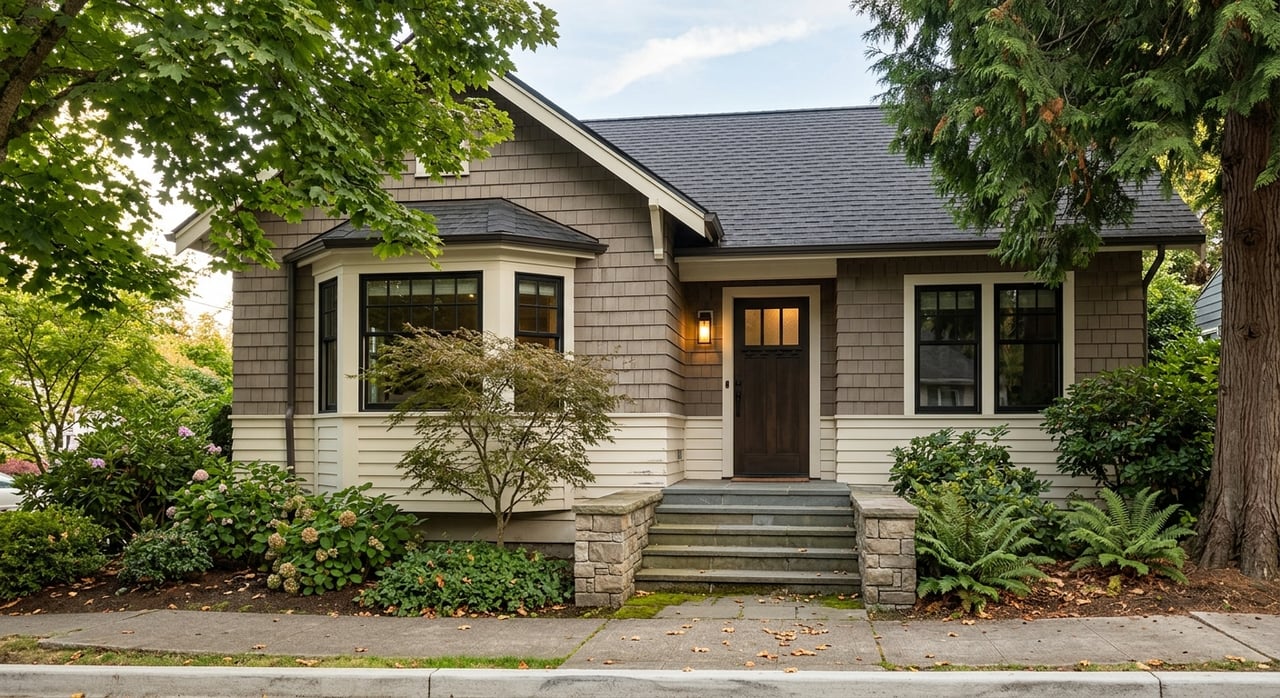
None of this makes Mount Baker a weaker choice. The craftsman and Foursquare homes on the hill above the station, the lake access, the fifteen-minute ride downtown, all of that is unchanged by what happens to two parcels next to the platform. What changes is the story you should tell yourself about why those parcels matter. They are not a leading indicator of imminent luxury development pulling the whole area upmarket. They are a long-delayed public housing project finally getting built, on land that fought the zoning map for over a decade before losing.
Will construction near the station disrupt daily life through 2026 and beyond? Yes, at least in the near term. Demolition began in June 2026 and a formal groundbreaking is set for October, with the first phase not expected to open until 2028. Expect truck traffic, noise, and periodic road impacts in the immediate station area during that window.
Does new affordable housing next to the station affect resale value for nearby single-family homes? There is no evidence in the record here to suggest it does one way or the other. What the research does show is that this project is not the market-rate development that typically anchors comp growth, so buyers should not price in that effect based on this construction alone.
Is the market-rate parcel, Site B, likely to be developed soon? Sound Transit's own staff report describes real cost and complexity from the site's steep slope and critical area designation. No timeline has been set, and the same constraints that kept it vacant for seventeen years have not gone away.
If you are weighing Mount Baker against other neighborhoods along the corridor and want a read on what a specific block, lot, or listing actually means once you separate the zoning story from the ground truth, that is exactly the kind of comparison Hinds Team WA spends its time on. Reach out and we will walk through it with you, house by house if that is what it takes.